
Unique — Rare Chromosome & Gene Disorder Support
Family guide
ZTTK Syndrome (SON-related syndrome)
The one to read first. Written for families, medically reviewed, and honest about what is and is not known. Free PDF, in English or Portuguese.
ZTTK Syndrome
September is ZTTK Syndrome Awareness Month
ZTTK Syndrome was named in 2016. Most doctors will never see a case, and most families spend years without a word for what they are living. This page is here so the next family finds one sooner.
2016
The year the syndrome was identified, as whole exome and genome sequencing became widely available.
~65
Patients described in the scientific literature so far.
250+
Patients identified by the ZTTK SON-Shine Foundation. The real number is higher still.
Start here
Open any question. Where a clinical term is unavoidable I have kept it and explained it, because the words are what let you ask better questions of a doctor.
ZTTK Syndrome is a rare genetic condition that changes how the brain and body develop. It is present from conception, affects each person differently, and is lifelong.
The name is an initialism of the four researchers who first described it in 2016: Zhu, Tokita, Takenouchi and Kim. You will also see it written as SON-related syndrome, after the gene involved.
It was identified only as whole exome and whole genome sequencing came into wider use, which is why most clinicians have never met a patient with it. That is not a reflection of how serious it is. It is a reflection of how new the name still is.
The words you will hear in a clinic
syndrome
A group of features that tend to appear together and share one underlying cause. It does not mean every person shows every feature.
SON-related syndrome
The same condition described by its cause rather than its discoverers. Increasingly the preferred name in research papers.
A change in a single gene called SON, which sits on chromosome 21 at a location written 21q22.11. SON acts as a kind of editor inside the cell, helping other genes be read correctly. A great many developmental processes depend on it.
Everyone has two copies of SON. In ZTTK Syndrome one copy carries a change that stops it working. The remaining copy cannot fully cover the shortfall, and development is affected as a result.
In almost every known case the change is de novo: it appeared for the first time in that child and was not inherited from either parent. Nothing a parent did or did not do during pregnancy caused it.
The words you will hear in a clinic
SON gene
The gene responsible. Its protein helps the cell process the instructions copied from other genes, which is why a change to it affects so many systems at once.
chromosome 21q22.11
The gene's address. Chromosome 21, long arm (q), band 22.11. This is a single-gene condition, not the same as Down syndrome, which involves an entire extra chromosome 21.
haploinsufficiency
When one working copy of a gene is not enough to do the job. This is the mechanism behind ZTTK Syndrome.
de novo
Latin for 'anew'. The genetic change arose spontaneously in the child rather than being passed down.
Only by reading the genetic code. ZTTK Syndrome cannot be seen on a routine blood test, a scan, or the standard chromosome tests offered a generation ago. It takes exome or genome sequencing.
The usual path starts with something else: delayed milestones, low muscle tone, feeding difficulty, a seizure. Investigations follow, often for years, before sequencing is offered and a name finally appears.
That wait has a cost. A named diagnosis unlocks the right therapies, connects a family to others living the same condition, and ends the search. Shortening it is the single most useful thing wider awareness can do.
The words you will hear in a clinic
exome sequencing
Reading the roughly two percent of the genome that codes for proteins, where most disease-causing changes sit. The test that identifies most cases of ZTTK Syndrome.
diagnostic odyssey
The term used for the years many rare-disease families spend between first symptom and correct diagnosis.
variant of uncertain significance
A genetic change found in testing whose effect is not yet known. Some are later reclassified as causative, which is why re-analysis of an old test can be worthwhile.
It varies widely, and that variation matters more than any list. Commonly described features include developmental delay and intellectual disability, low muscle tone, differences in brain structure seen on imaging, vision and feeding difficulties, short stature, and seizures in some children.
None of that describes a person. Children with ZTTK Syndrome learn, communicate, show preference and humour, and make progress on their own timeline. Physiotherapy, speech and language therapy, occupational therapy and good educational support all change outcomes.
What families consistently say helps most is other families. Nobody explains the day to day better than someone already living it.
The words you will hear in a clinic
hypotonia
Low muscle tone. Babies can feel floppy to hold and may be slower to sit, stand and walk. It responds to physiotherapy.
global developmental delay
Delay across several areas of development at once, such as movement, speech and learning, rather than in one alone.
September is ZTTK Syndrome Awareness Month, and the point of it is not a colour or a hashtag. It is that a condition this rare only becomes visible to clinicians when families make it visible, and visibility is what shortens the wait for the next diagnosis.
More every year. A decade ago the condition had no name. Today there are published clinical descriptions, a growing patient registry, a family foundation funding research, and new papers appearing in the literature. Around 65 patients appear in the literature, while the ZTTK SON-Shine Foundation has identified more than 250, which tells you how much of this condition is still unrecorded.
This is the ordinary arc of a rare disease, and it only moves when cases are reported and families are counted. Every diagnosis added to the record sharpens what the next family is told.
The research below is technical by design. It is here because families deserve access to the same sources their clinicians read.
The words you will hear in a clinic
patient registry
A shared record of diagnosed cases. Registries are how a condition too rare for a single hospital to study becomes possible to study at all.
natural history study
Research that follows a group of patients over time to establish how a condition typically progresses. A prerequisite for testing any future treatment.
Go deeper
Roughly the order I would read them in. Everything here is free and written by people who know the condition. The family guides also exist in Portuguese.
Unique — Rare Chromosome & Gene Disorder Support
Family guide
The one to read first. Written for families, medically reviewed, and honest about what is and is not known. Free PDF, in English or Portuguese.
Unique — Rare Chromosome & Gene Disorder Support
Family guide, for children
The same condition explained for a child or a sibling to read. Useful for schools too.
SER Excecional
Testimony
A testimony by Andrea Correia about the discovery of the syndrome: the challenges, the emotions and the hope of living with an exceptionally rare condition. The closest thing on this page to sitting with a family who already knows.
ZTTK SON-Shine Foundation
Community
Families, researchers and clinicians in one place, and the foundation that funds research into the syndrome. Where to meet others working on it and follow what is being funded.
PubMed
Research
For clinicians and for families who want the primary source. Technical, and worth taking to an appointment.
SERaro
Portugal
Local navigation, rights and peer support, in Portuguese.
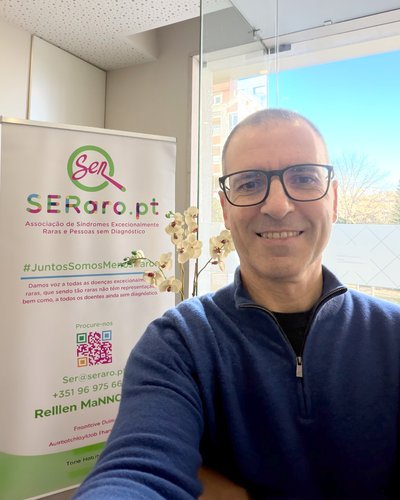
Why this page exists
I did not come to ZTTK through a textbook. I came to it as a father, and then stayed as an advocate, because the gap between what science knows and what a family is told is still far too wide. I will not promise you a treatment. What I can say is that ZTTK Syndrome went from unnamed to described, catalogued and actively researched in under a decade, and that every family who finds the name earlier gets those years back. — André
Write to me